Halo AI raises £750k to build a 90-minute antibiotic susceptibility test for newborns with sepsis

The Oxford company’s technology agreed with reference testing on 96.8% of results in a study at 6 NHS hospital laboratories. The round, led by Kestrel Point Capital, will pay for the first benchtop instrument.

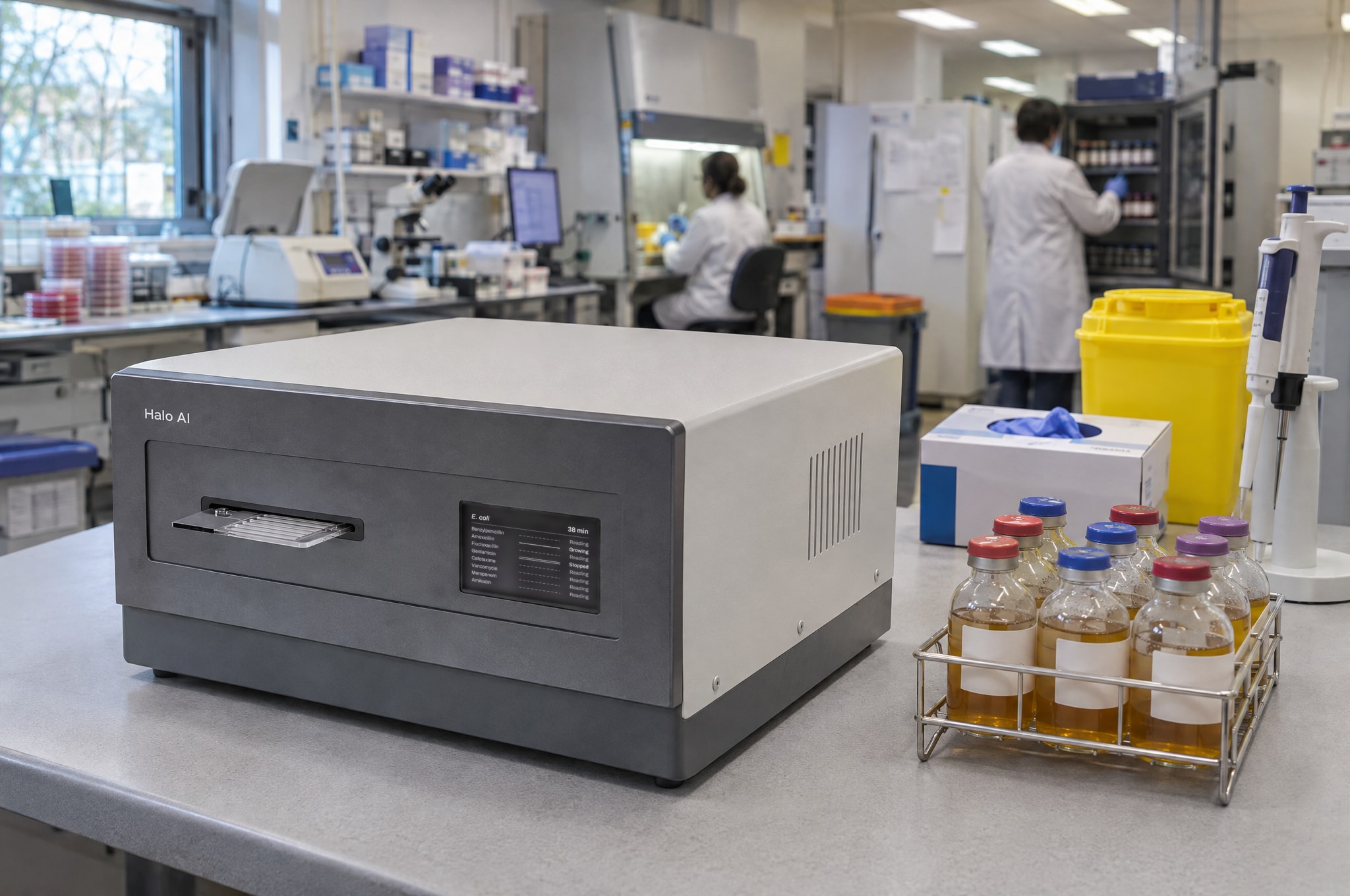
A working hospital microbiology laboratory: the Halo Reader, a small grey instrument, on a bench beside two tall blood culture incubators, with scientists at a microscope and a safety cabinet.
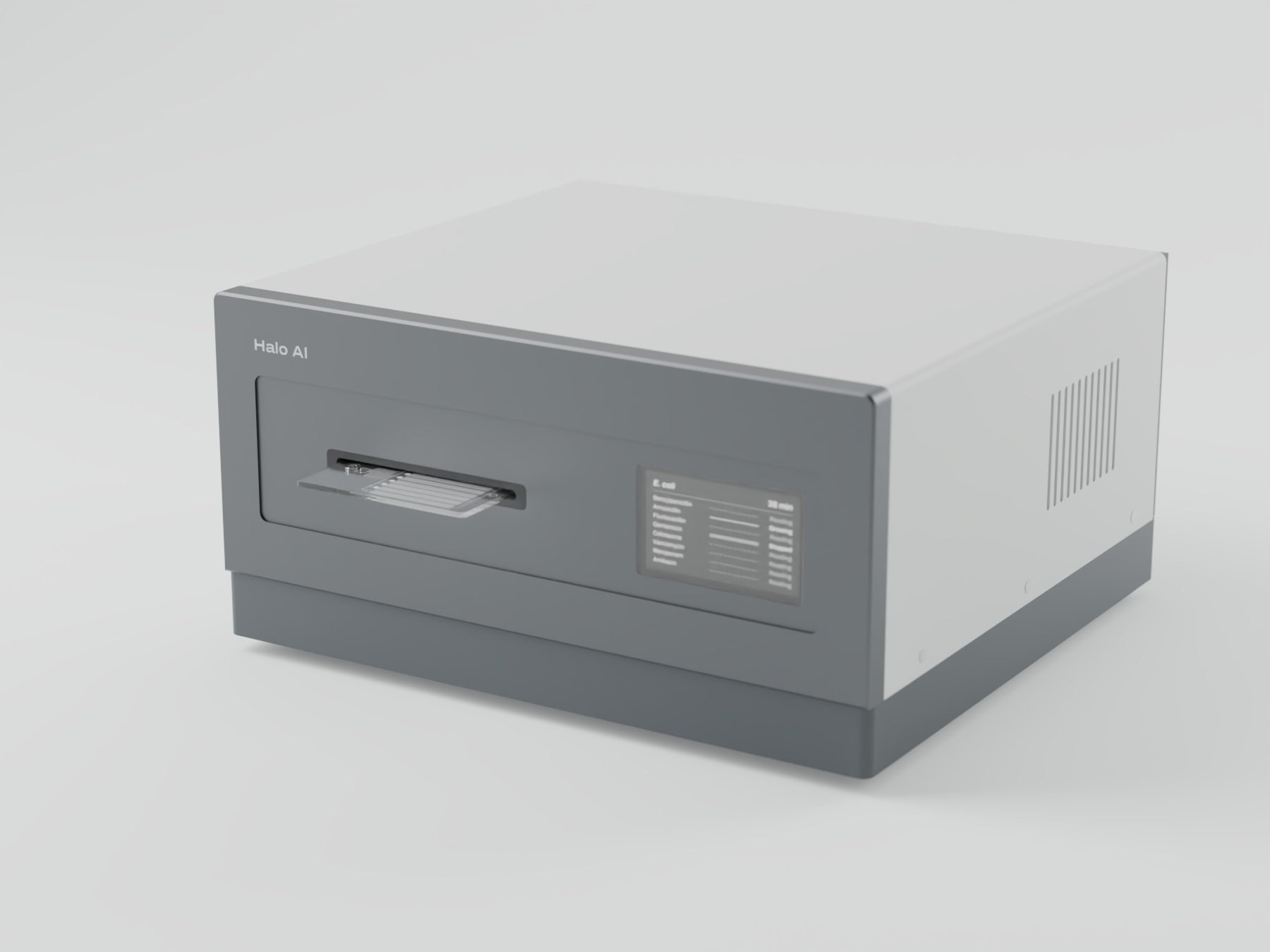
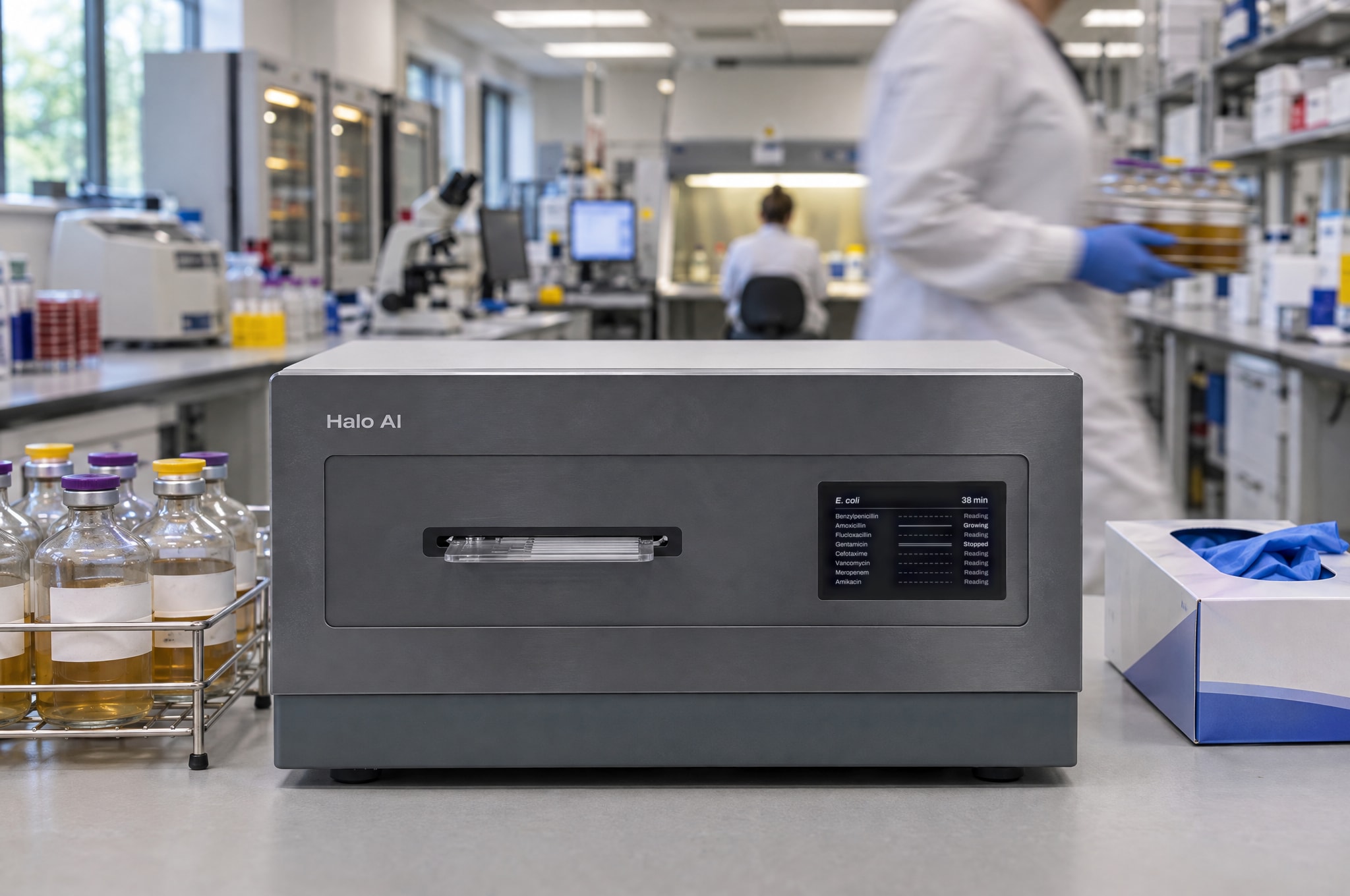
Design visualisation: the Halo Reader in a hospital microbiology laboratory. Download JPEG, 2048 × 1360

Halo AI, which is developing a rapid antibiotic susceptibility test for newborns with sepsis, has raised £750k in seed funding at a £5m post-money valuation. Kestrel Point Capital, a London investor in early-stage life sciences companies, led the round.

The test shows which of the 8 antibiotics used in neonatal units will kill the bacteria growing in a baby’s blood, and it does so in about 90 minutes. Standard testing takes around two days. In a prospective study of 1,214 blood cultures at 6 NHS laboratories, a laboratory prototype agreed with reference testing on 96.8% of results. The benchtop instrument that hospital labs would use, the Halo Reader, has been designed but not yet built. The seed round will pay to build it, to hire the company’s first four employees and to start taking the test into hospital labs.

Take a baby born six weeks early who develops a fever on day five. Her blood culture flags positive overnight. As things stand, the neonatal team keeps her on standard antibiotics and waits up to two more days to learn whether they are working, because standard testing needs a further day to grow a pure culture and then an overnight test (Journal of Clinical Microbiology study via PMC). With a 90-minute test, the lab could have the answer by mid-morning.

Neonatal sepsis affects an estimated 3 million newborns a year and causes up to 570,000 deaths (Bulletin of the WHO). An estimated 214,000 of those deaths each year are attributed to resistant bacteria (PLOS Medicine meta-analysis). In one global study, 18% of babies whose blood culture grew a pathogen died (GARDP).

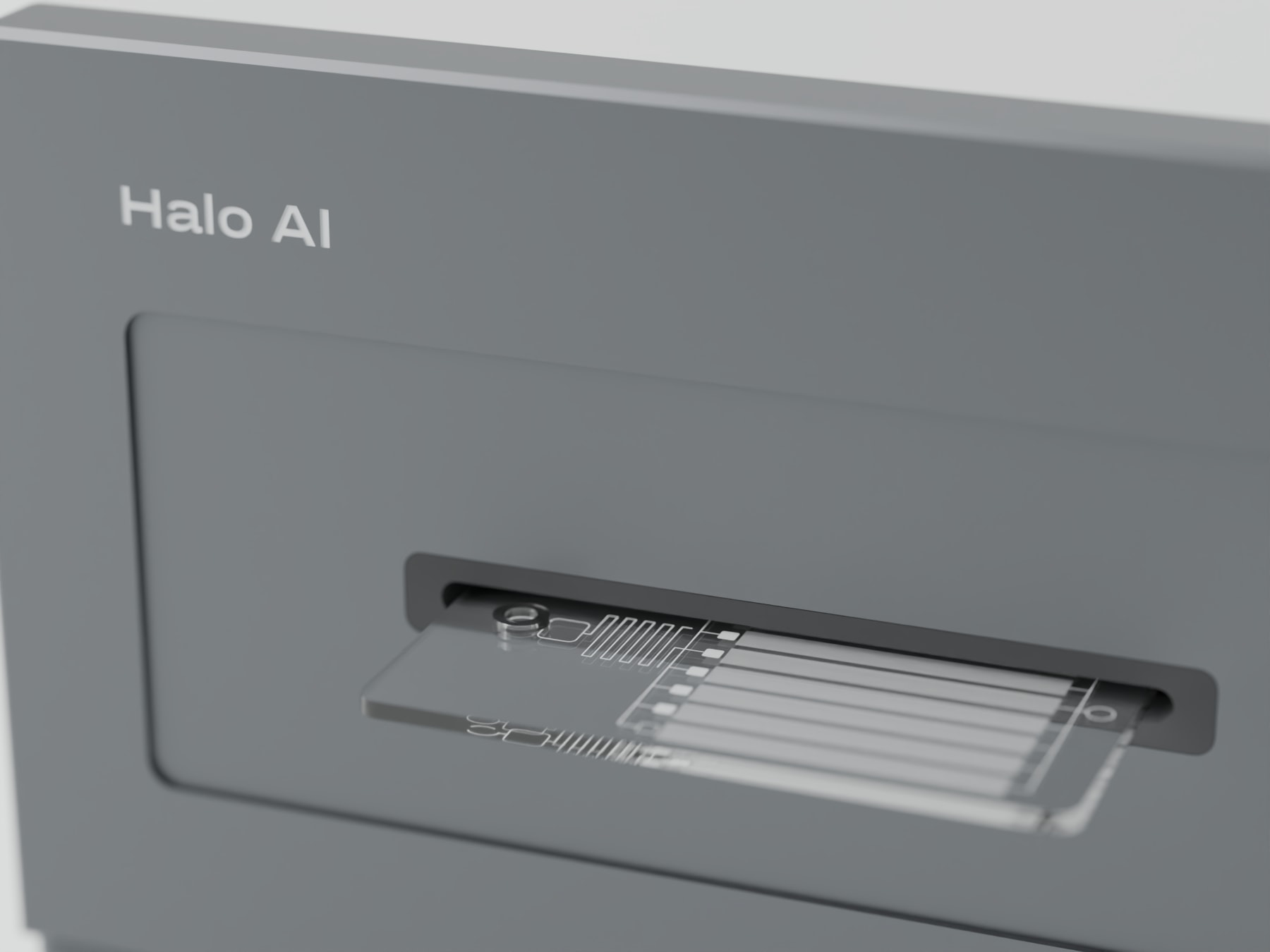
Standard testing waits for bacteria to grow into a colony. Halo AI watches individual bacteria instead. A lab scientist pipettes a drop of the positive culture into a single-use cartridge, where the bacteria flow into hundreds of microscopic channels, some of them loaded with an antibiotic. A camera films the channels and the software tracks every cell. Cells that keep dividing show that the drug has failed, and cells that stall and swell show that it is working. Most rapid systems are built for adult Gram-negative infections. Halo AI is trained on the bacteria that infect babies, including Group B strep and staphylococci.

In the Okoro Laboratory at Oxford I filmed 768 combinations of organism and antibiotic under the microscope, and within the hour you could see whether each antibiotic was working. The laboratory result still takes two days. For a baby on an antibiotic that isn’t working, each of those hours gives the infection more time, so we built Halo AI to read the answer as soon as it is there.

Ellie Rose, founder and CEO of Halo AI, who developed the method in the Okoro Laboratory at the University of Oxford’s Sir William Dunn School of Pathology and is so far the company’s only employee

When a baby’s culture comes back positive we have to choose an antibiotic there and then, without knowing what the bug is sensitive to. It’s the hardest call we make, and we don’t usually get the answer until day three. If the lab could tell us on day one, that baby would be on the right antibiotic two days earlier.

Dr Amara Fenwick, consultant neonatologist at Thames Valley Children’s Hospital

Availability. Halo AI is not available to laboratories yet. The first Halo Readers built with this round will go to NHS labs serving neonatal units as pilots, and microbiology labs that process more than 20 positive blood cultures a month can register their interest. After the first pilots the company plans a 12-month evaluation with Lakeside Children’s Hospital in Kenya, where resistance to the WHO-recommended first-line drugs is common. Halo AI is recruiting its first four employees, and two of the roles are open to recent graduates. The roles are listed on the careers page.

About Halo AI. Halo AI Ltd is a diagnostics company based in Oxford, UK. It is developing a single-cell imaging test that reads antibiotic susceptibility directly from positive blood cultures, starting with newborn sepsis. The study behind the figures above is available as a preprint (opens in a new tab).

Press images

Frequently asked questions

These are the questions we hear from consultant microbiologists whose labs serve a neonatal unit, and from the neonatologists who wait for their results.

What does Halo AI tell me?
It tells you whether the bacteria in a positive blood culture are susceptible or resistant to each of 8 antibiotics: benzylpenicillin, amoxicillin, flucloxacillin, gentamicin, cefotaxime, vancomycin, meropenem and amikacin. That covers the first-line combinations NICE recommends for neonatal infection (benzylpenicillin with gentamicin for early-onset, flucloxacillin with gentamicin for late-onset) and the drugs you would usually escalate to (NICE NG195; late-onset).
Does it identify the organism?
No, you carry on using whatever identification method you have now. Halo AI starts reading as soon as the cartridge is loaded and applies the right breakpoints when you enter the identification, so the final report comes within minutes of the ID.
How long does it take?
About 90 minutes from loading the cartridge. In the study the median was 88 minutes. It was quicker for E. coli (52 minutes) and slower for coagulase-negative staphylococci (102 minutes). Hands-on time is about 3 minutes, so a biomedical scientist on a night shift can run it.
Which organisms is it validated for?
The common neonatal pathogens: Group B streptococcus, Staphylococcus aureus, coagulase-negative staphylococci, E. coli, Klebsiella and Enterobacter. If the culture grows anything else, including fungi, Halo AI flags it for standard testing.
Can we have one now?
Not yet. So far the test has only run on a laboratory prototype, and we are using the seed round to build the benchtop Halo Reader. If you register your lab we will get in touch when pilot Halo Readers are ready.
What about mixed cultures?
Halo AI flags a mixed culture and recommends standard testing. It doesn’t come up often, because most positive blood cultures grow a single organism. In our study 21 of the 1,252 cultures tested were polymicrobial.
How accurate is it?
In our prospective study of 1,214 cultures at 6 NHS labs, Halo AI agreed with reference broth microdilution on 96.8% of results. It called a resistant organism susceptible in 8 of 1,116 resistant results, which is 0.7%. The accepted limits for a susceptibility test are at least 90% agreement and no more than 1.5% false-susceptible results, and our own target for agreement was 95%. The study ran on a laboratory prototype, so we will check the finished Halo Reader against these results before any pilot.
Will it shorten antibiotic courses for babies who turn out not to be infected?
No. Halo AI only tests cultures that have flagged positive. A baby whose culture stays negative still follows NICE’s review at 36 or 48 hours to decide whether to stop. The benefit is for babies who are infected, who can be moved to the right drug sooner.
How will it fit into the lab?
The Halo Reader is a benchtop instrument designed to sit next to your blood culture incubators. It will send results to your laboratory information system and is meant to run 24 hours a day.
What will it cost?
We plan to charge £45 per test and to place the Halo Reader free of charge under a reagent-rental agreement.
Can we use it on adult cultures?
Not yet. We will validate it on adult cultures after the newborn launch.
Is it regulated?
Not yet. At the moment Halo AI is a research prototype and is not for clinical use. Before any result is used in patient care we will apply for UKCA marking as an in vitro diagnostic for susceptibility testing from positive blood cultures, and register the device with the MHRA.

Bring Halo AI to your lab Read the study